
Ladder Canyon & Painted Canyon
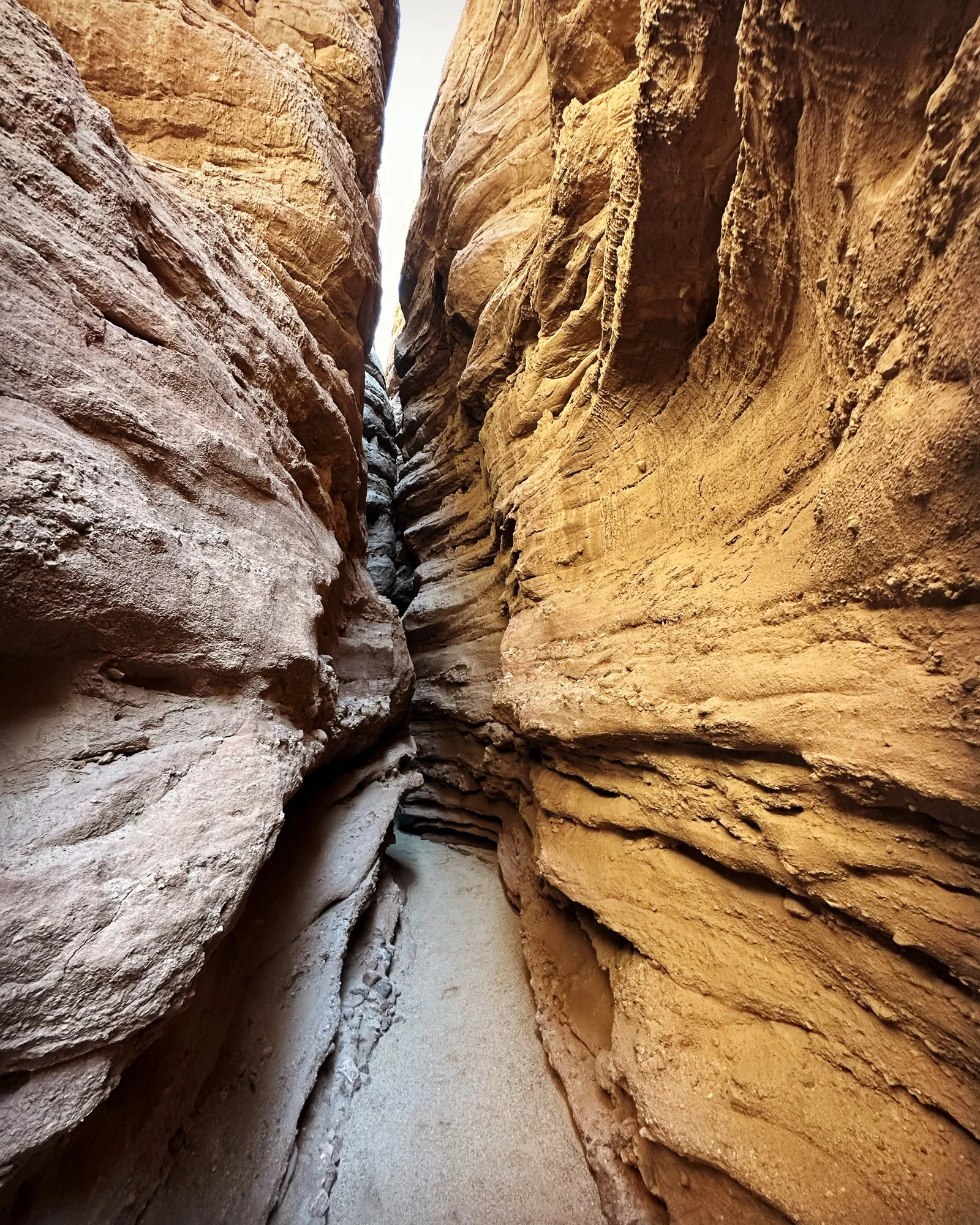
Ladder Canyon, Mecca Hills Wilderness, California
A Desert Labyrinth Carved by Fault Lines and Flash Floods
There are desert hikes… and then there are desert experiences shaped by tectonic force.
Tucked into the Mecca Hills Wilderness near the edge of the Coachella Valley, the Ladder Canyon & Painted Canyon Loop is one of Southern California’s most distinctive hikes — not because it’s the longest or the highest, but because it feels like walking through a geologic blueprint.
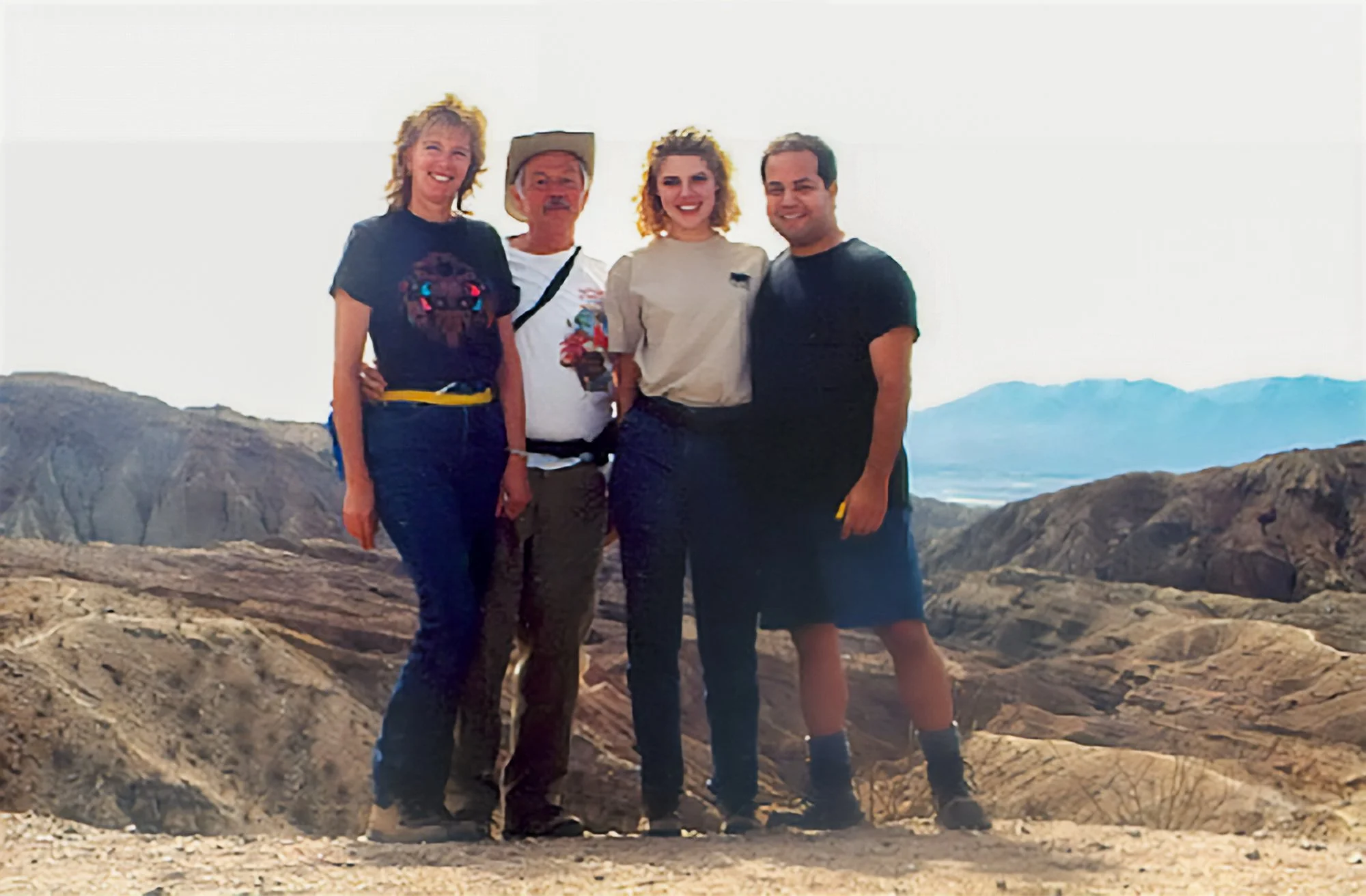
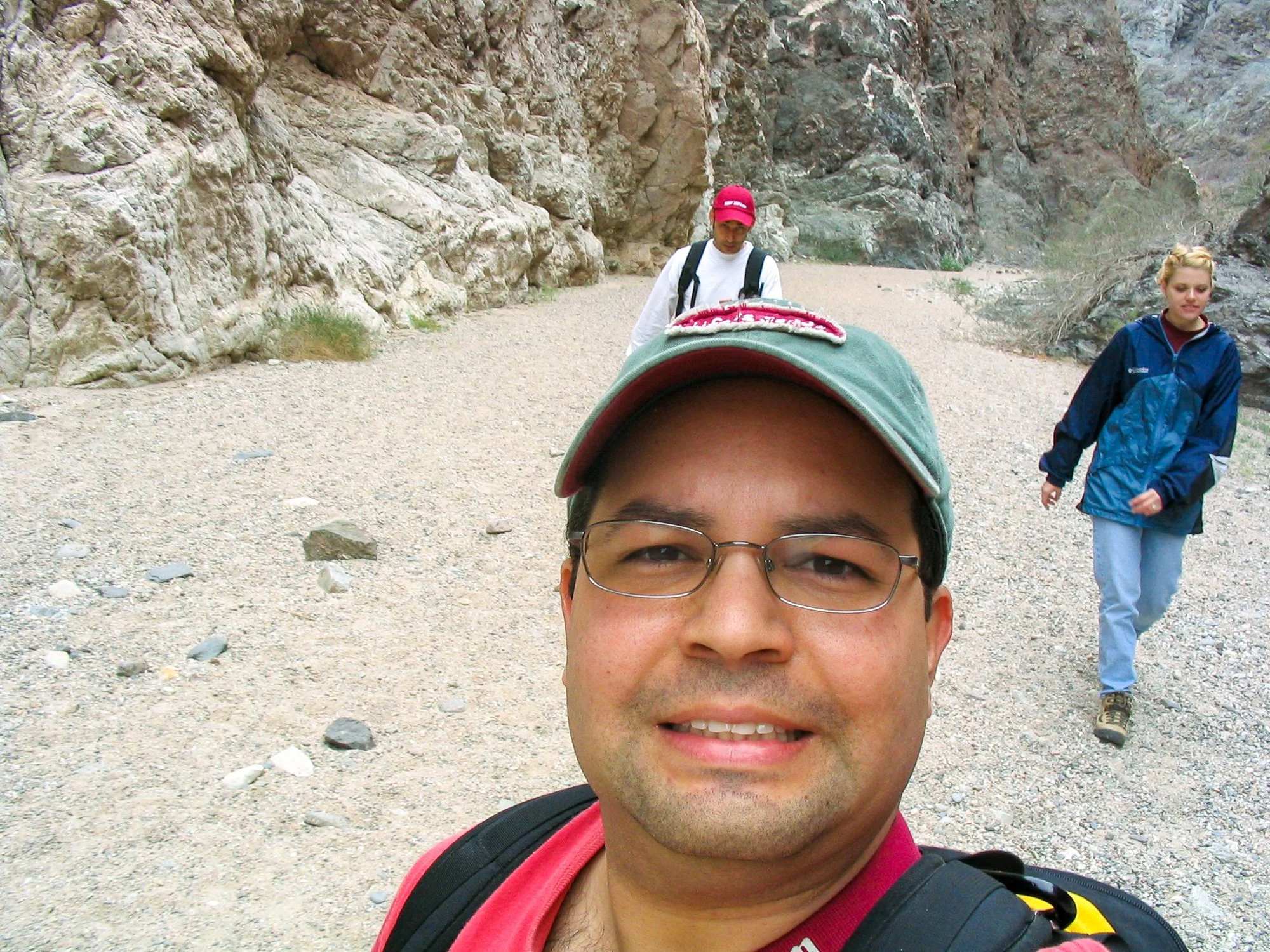
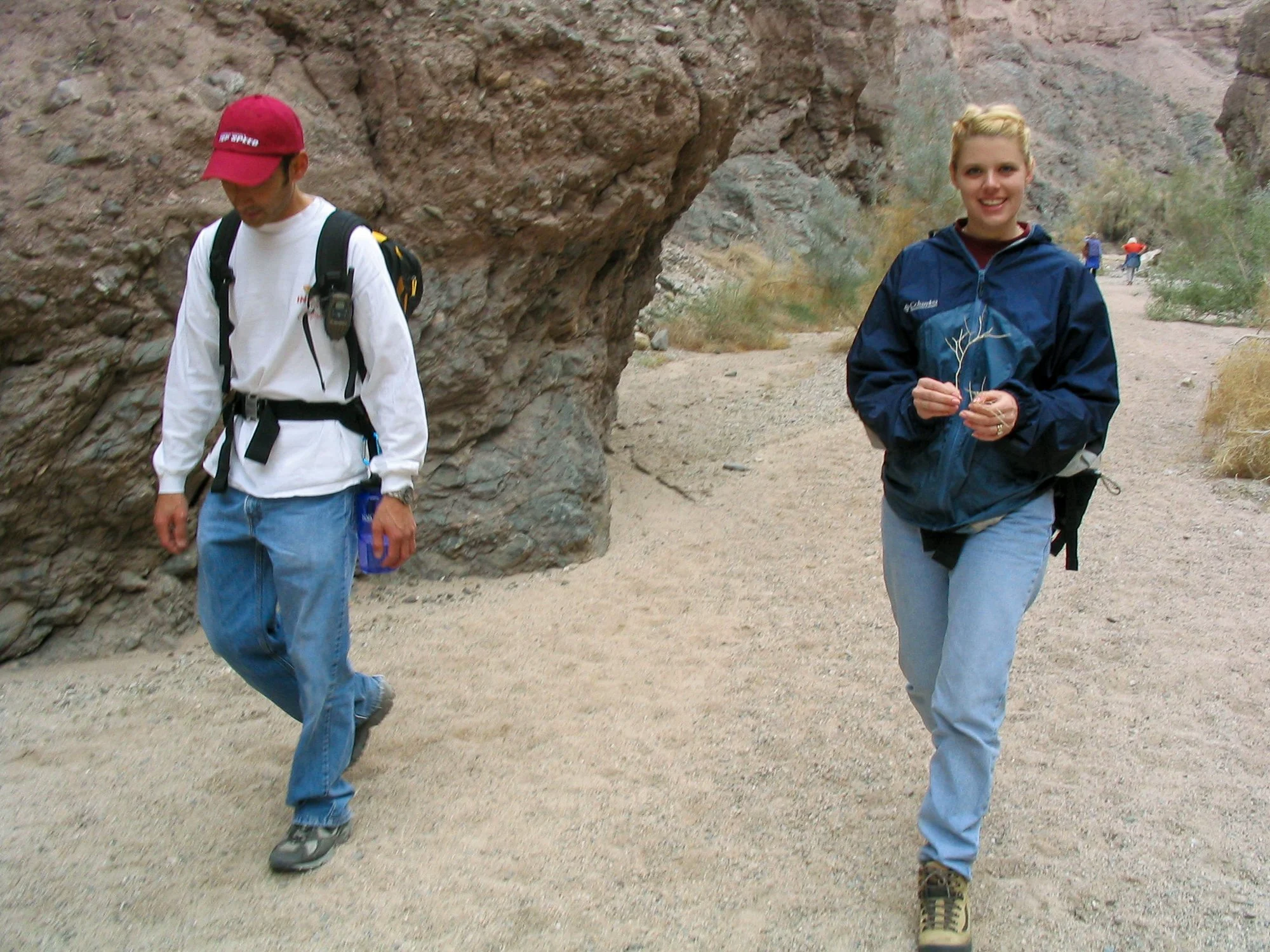
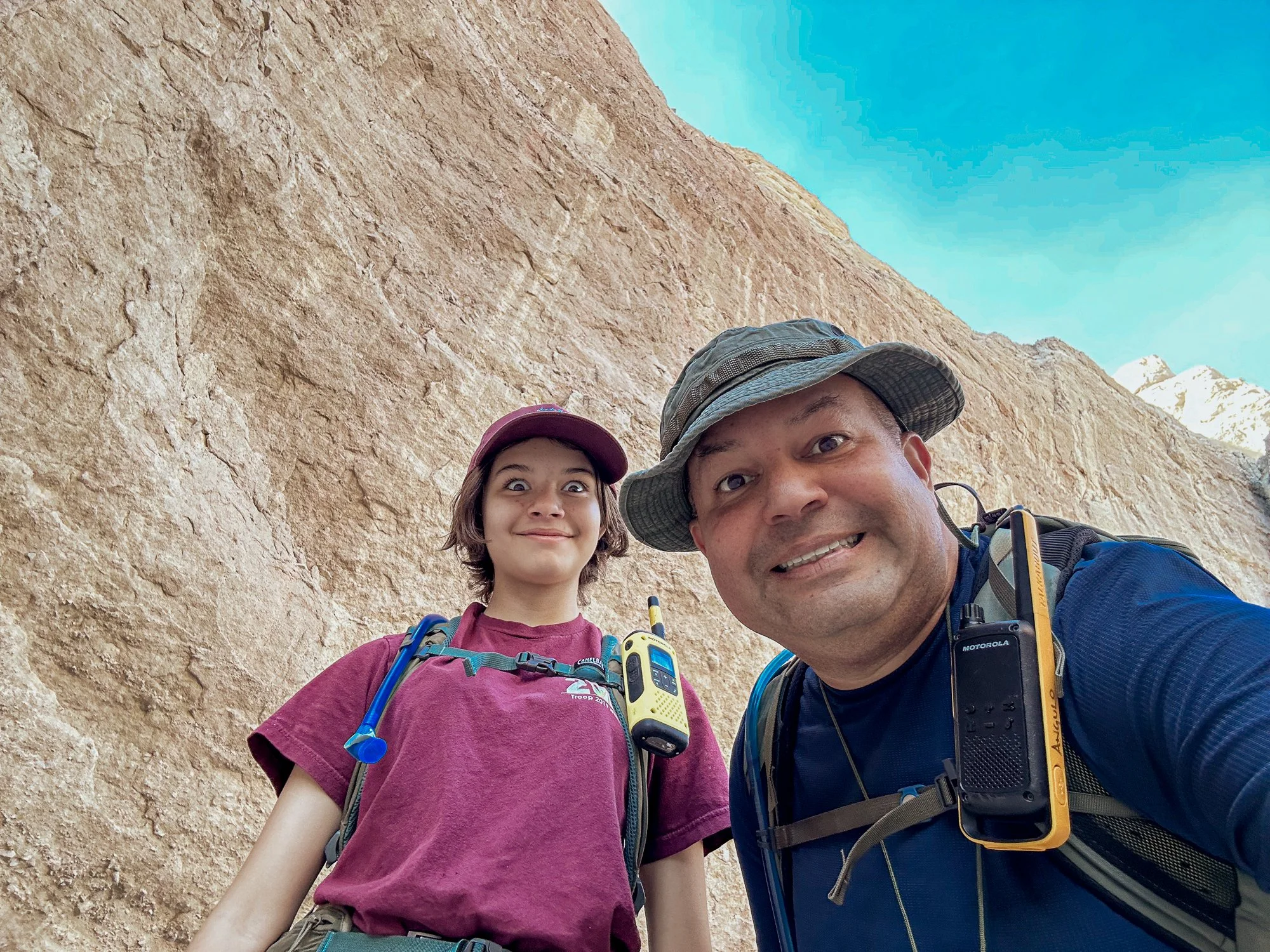
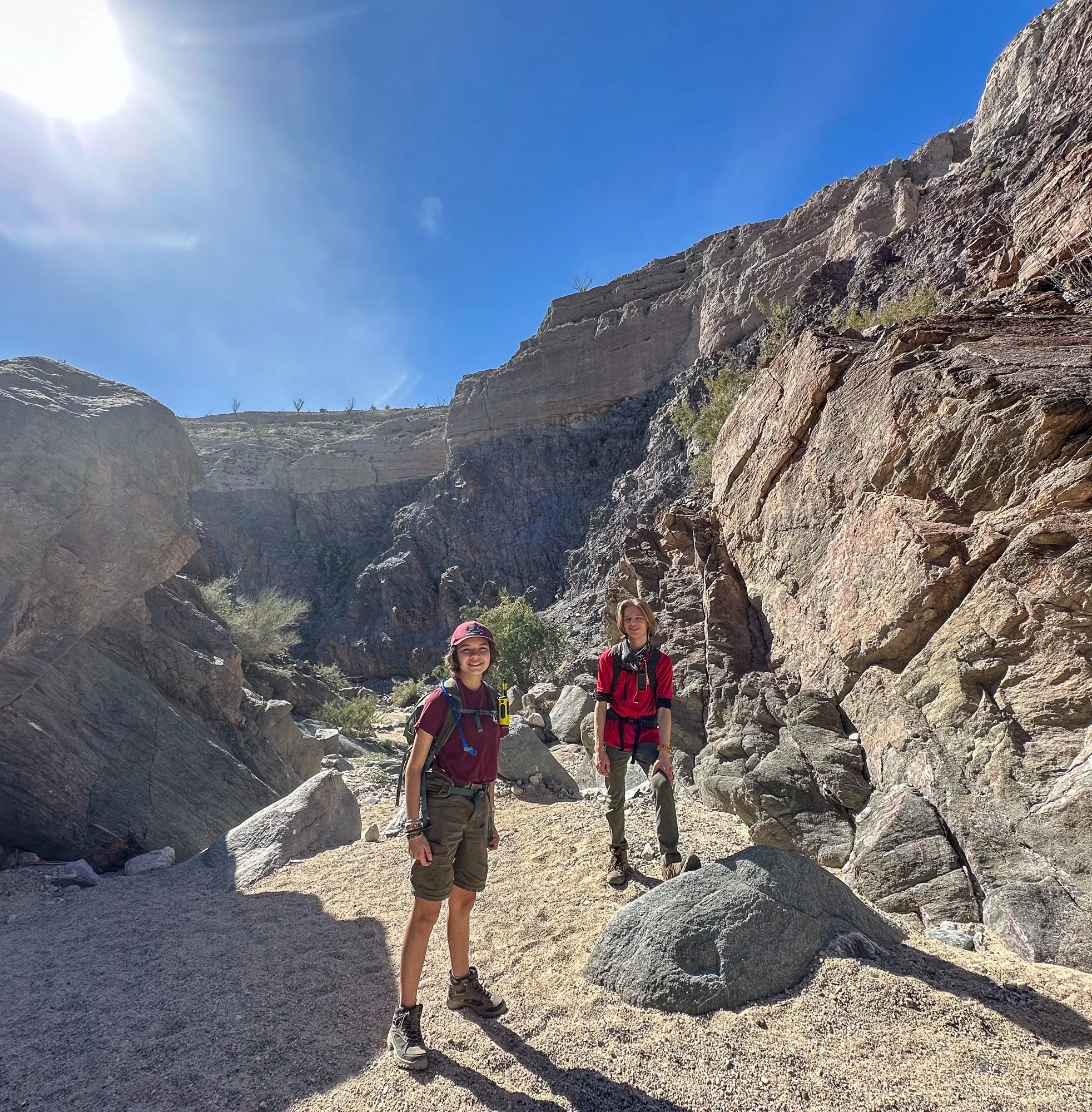
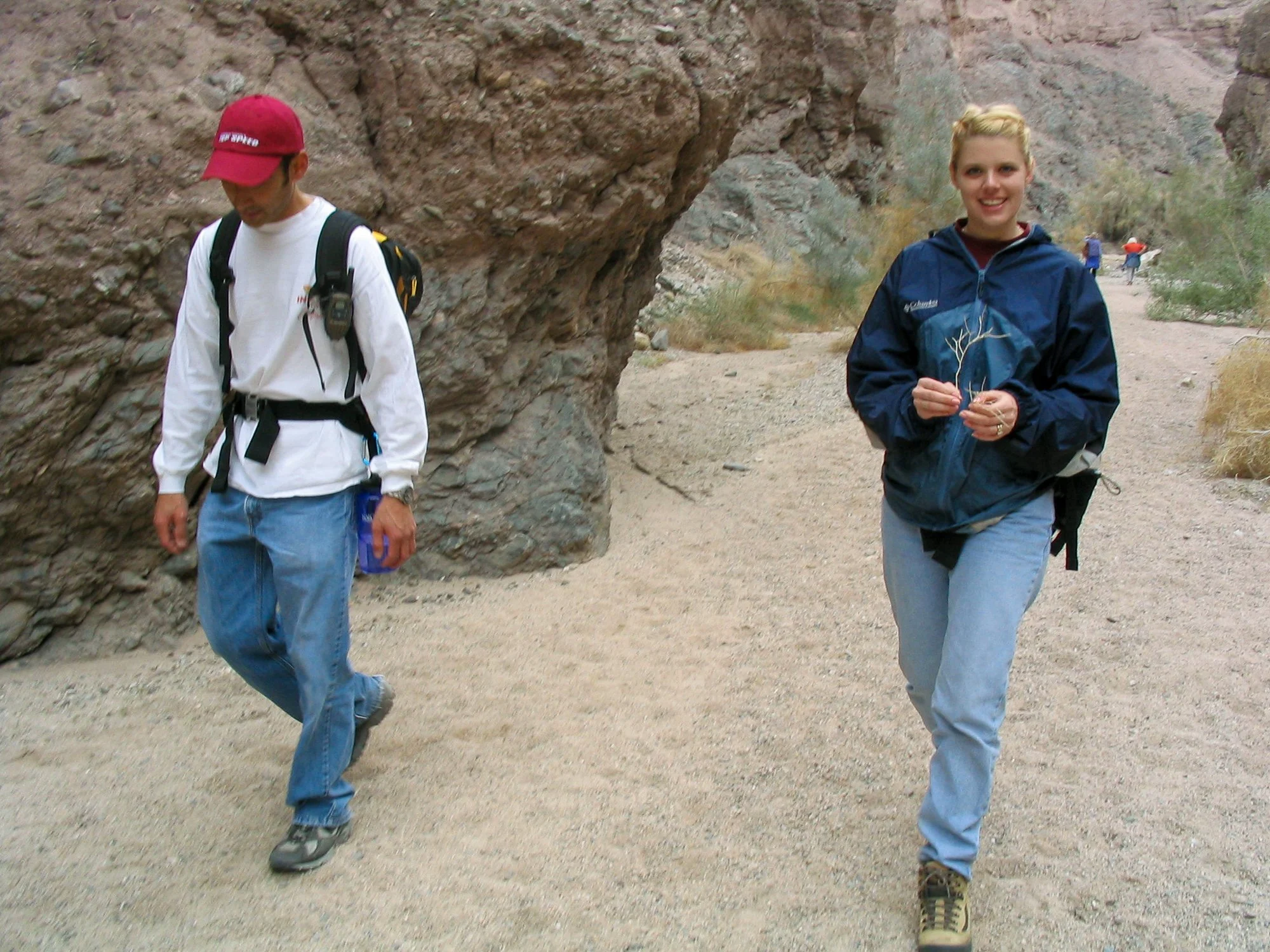
The layout of the land, the conditions to expect, and the deeper context behind what makes this place so compelling. For context, my wife and I first hiked this loop back in 2000 and again in 2004. We returned 20 years later in 2024 with our teenagers — watching them climb the same ladders we once navigated as newlyweds. Some trails become familiar. Others become markers in time.
This one is both.
Quick Facts
Location: Mecca Hills Wilderness (near Palm Springs, CA)
Trailhead: Painted Canyon Trailhead
Distance: ~4.5–5 miles (loop)
Elevation Gain: ~800–1,000 feet
Difficulty: Moderate (ladder climbing + exposed ridge hiking)
Best Direction: Clockwise (climb ladders up rather than down)
Vehicle Access: High clearance recommended; 4WD helpful after storms
Shade: Limited beyond slot canyon sections
Hazards: Extreme heat, flash floods, loose rock.
When to Go: Winter–if no rain, Spring for wild flower bloom, or late Fall but could be windy. NOT Summer, too hot.
The Layout of the Loop
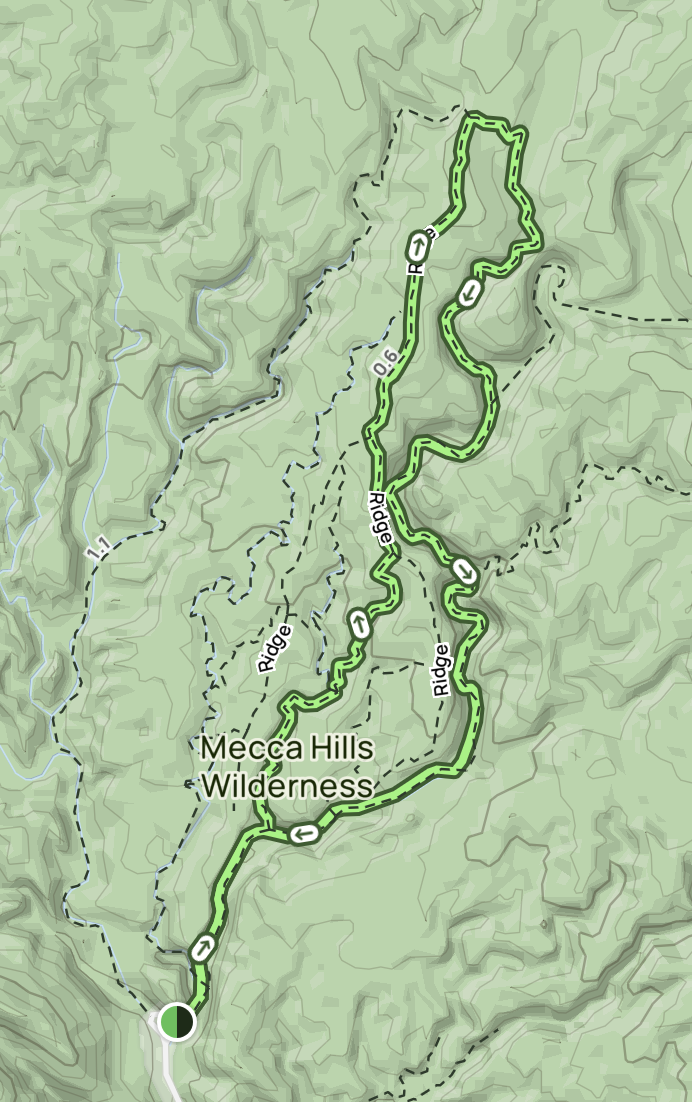
The hike begins at the Painted Canyon Trailhead, accessed via Painted Canyon Road — a washboarded, dirt road that can become rough or washed out after heavy rains. Higher clearance vehicles make it easier to navigate. 4-wheel drive gives you added confidence but not usually necessary.
From Box Canyon Road (paved) take Painted Canyon Road (dirt road) all the way to the Painted Canyon Trailhead parking lot, it will be obvious when you get there. There will be a trailhead marker. You will start on Painted Canyon trail for about 0.5 miles then on the left you will connect to the Ladder Canyon Trail which will lead you through Ladder Canyon to the Ridge and then back to Painted Canyon Trail to return back to the parking lot and Painted Canyon Trailhead.
Best trail maps are on AllTrails.com - Ladder Canyon & Painted Canyon Trail
The loop naturally divides into three sections:
1. Painted Canyon (Slot Canyon Navigation)
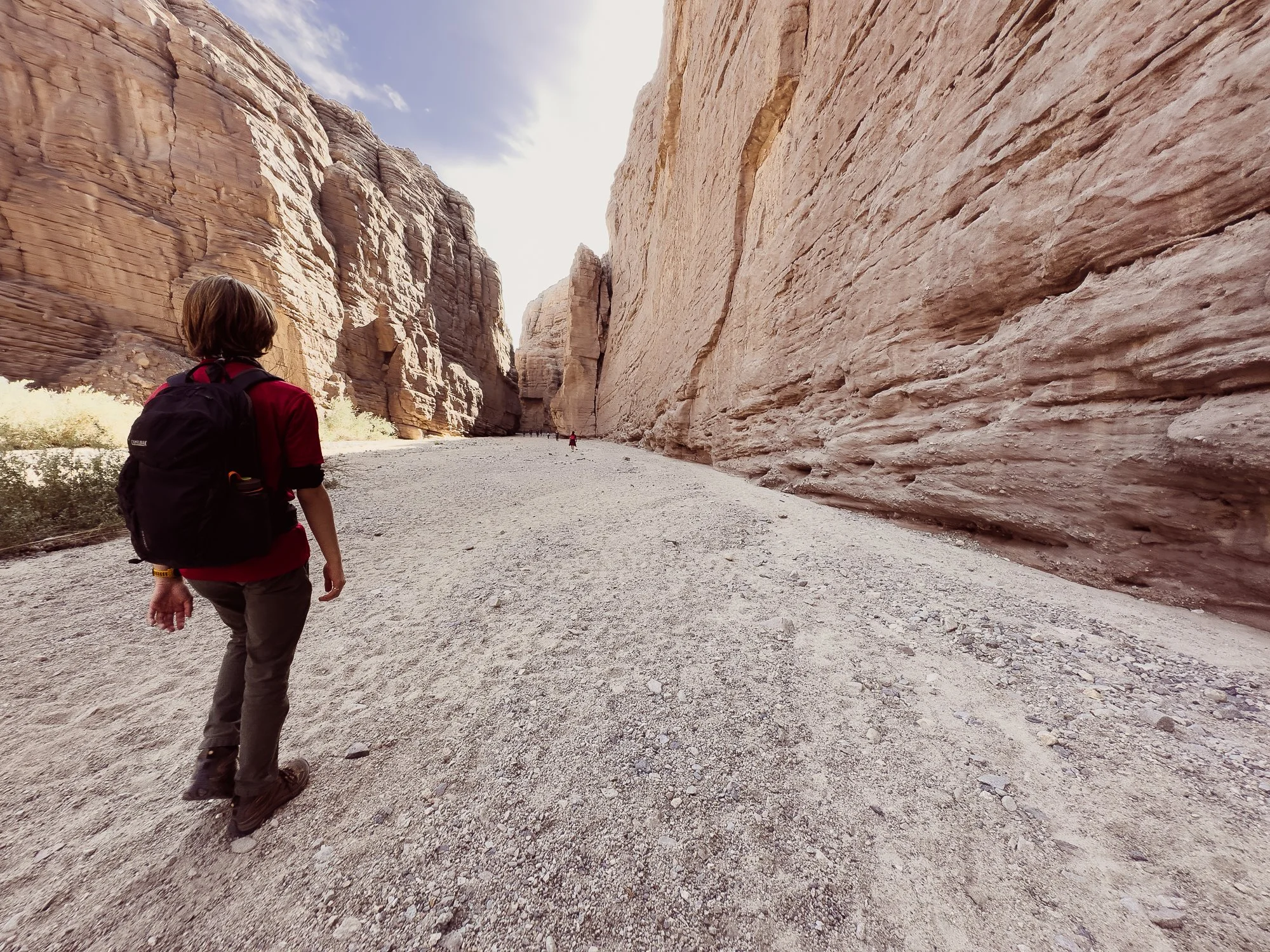
Painted Canyon
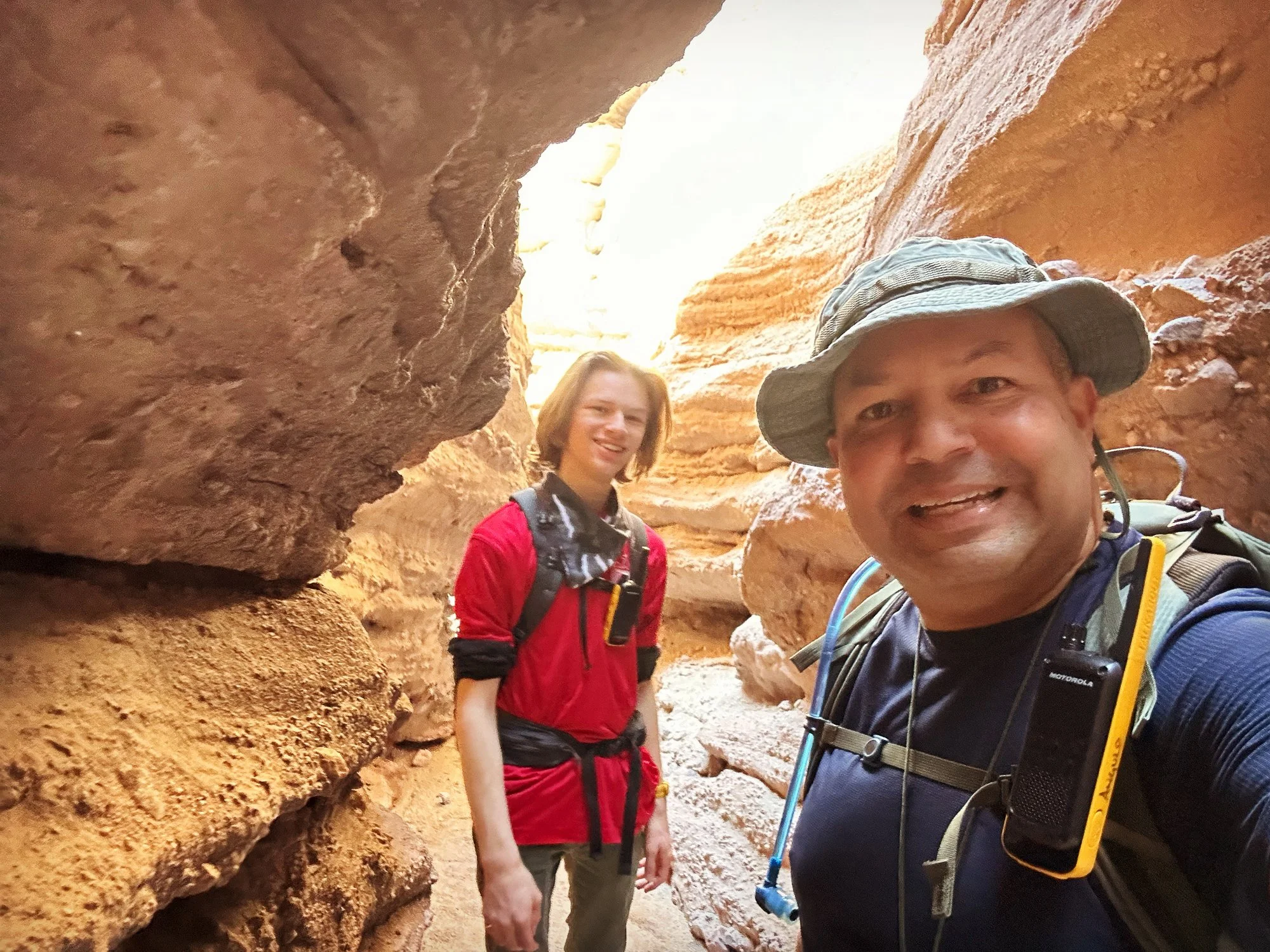
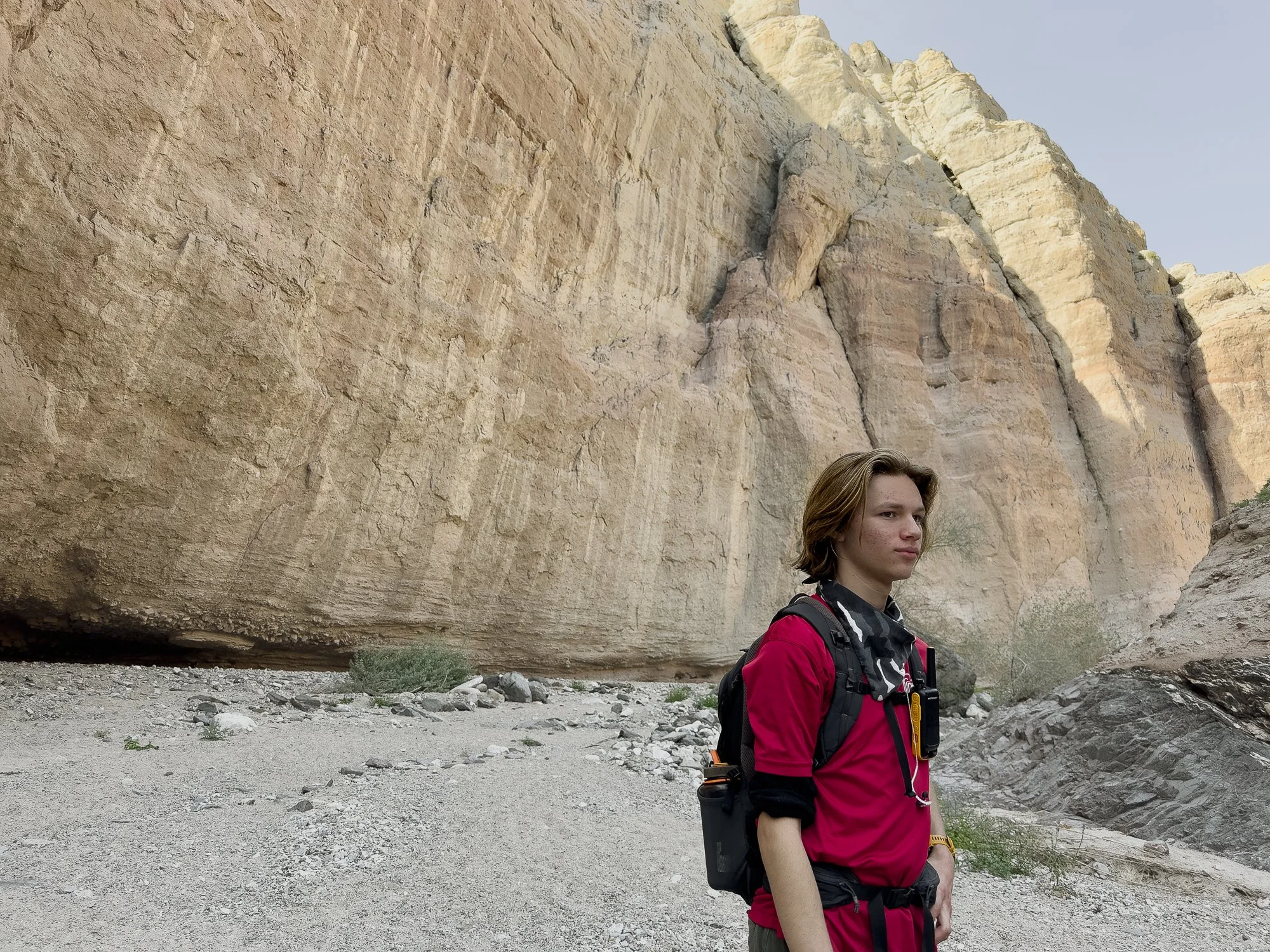
The opening stretch winds through a narrowing sandstone corridor. Painted arrows and rock markers guide hikers through the maze-like passages. The canyon walls rise steeply, displaying layered sediment deposits in warm desert tones — rust, sand, and faded coral.
These narrow corridors were carved by seasonal flash floods, which still shape the terrain today.
This leads to the Ladder Canyon Trailhead on your left side.
2. Ladder Canyon (Vertical Movement)
Ladder Canyon
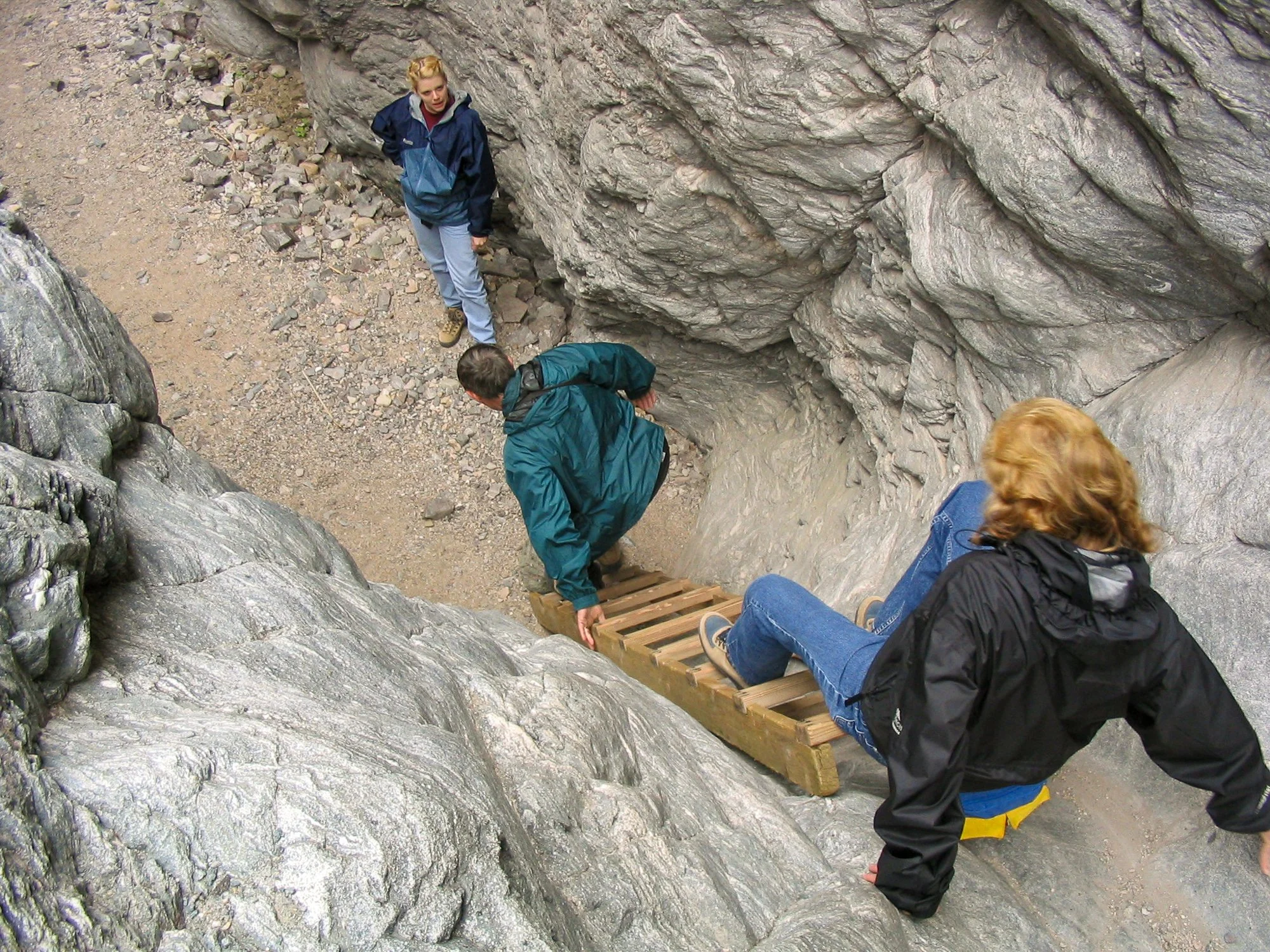
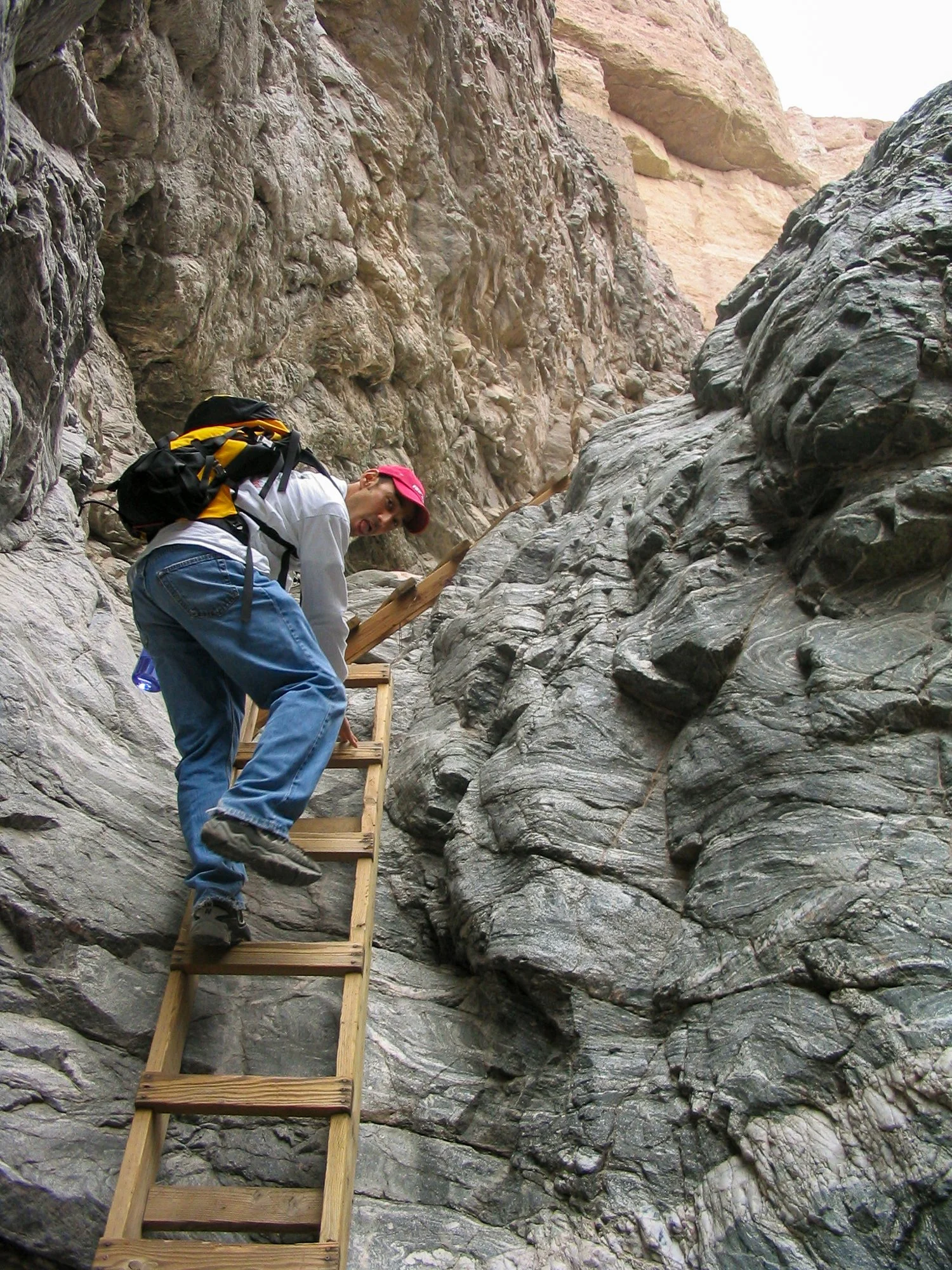
As the canyon tightens, metal ladders appear — bolted or tied securely into dry waterfall chutes. These ladders allow hikers to ascend steep sandstone pours carved by floodwater.
Going clockwise allows you to climb up the ladders, which is far safer and more intuitive than descending them.
This section is what gives the trail its reputation — and its adventure factor.
3. Ridge Trail (Exposure & Views)
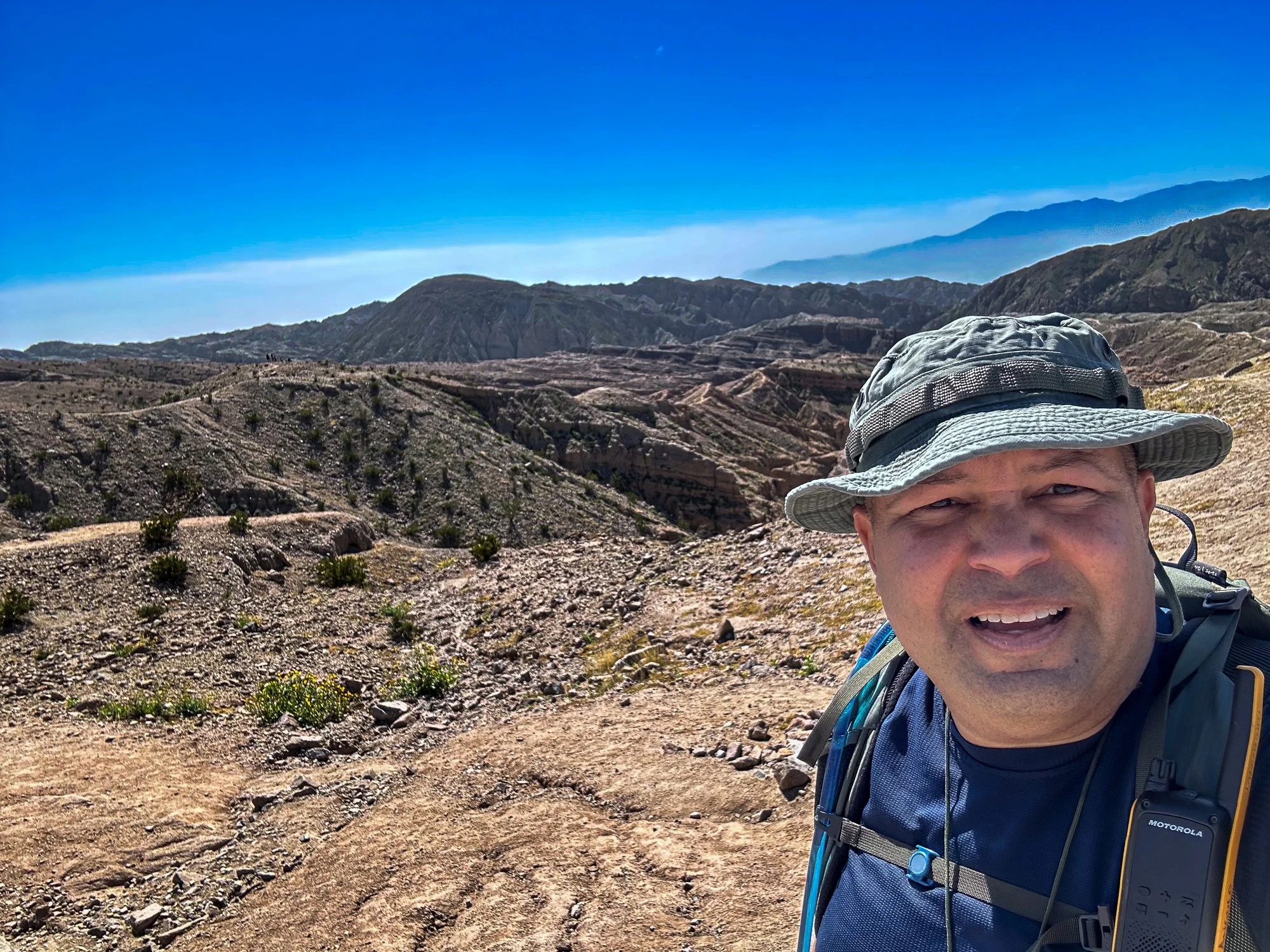
Ridge Trail
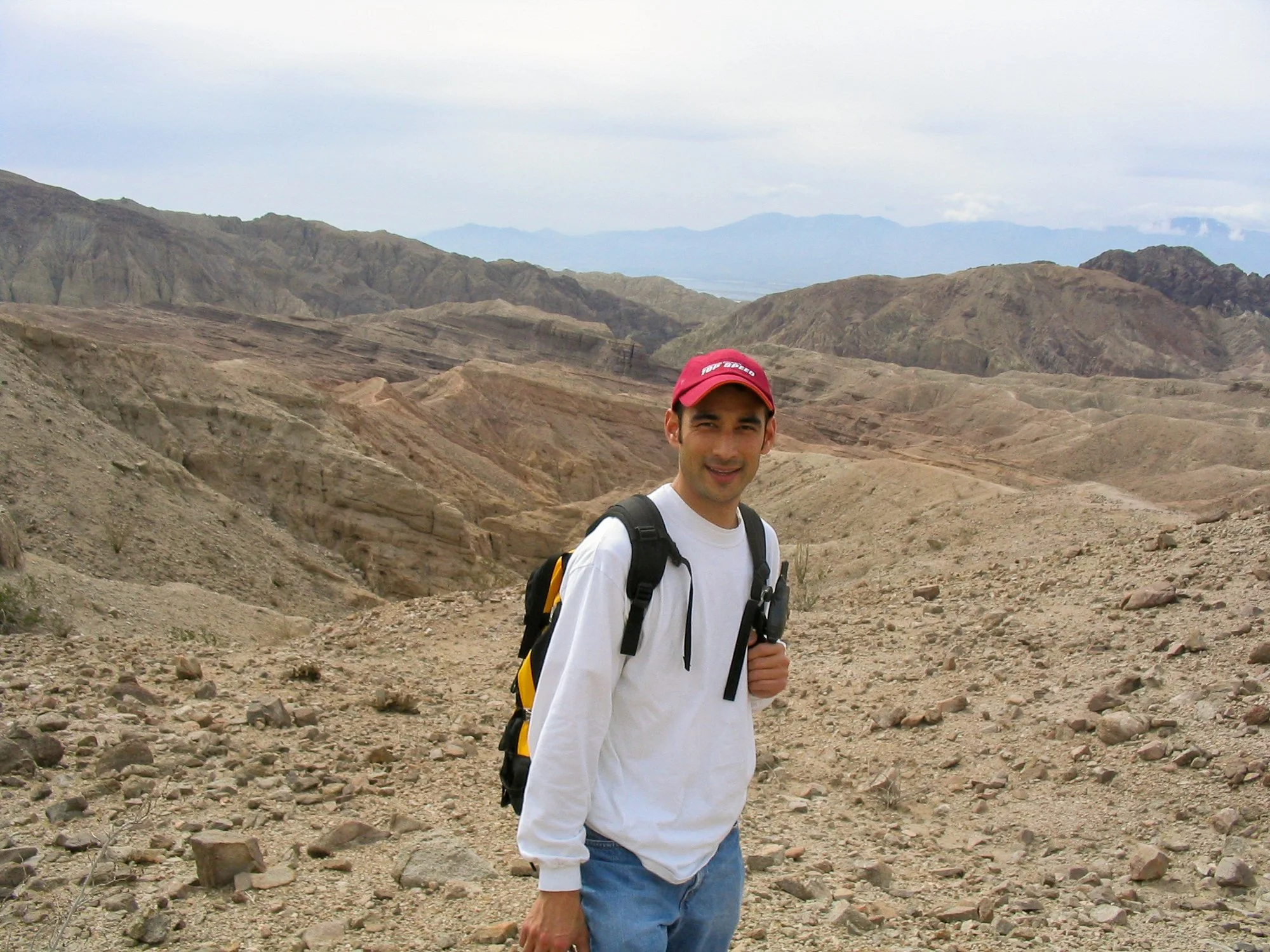
After exiting the slot canyon system, the trail climbs onto a ridgeline overlooking the Coachella Valley. This portion is fully exposed to the desert sun and includes steady elevation gain before descending back toward the trailhead.
This is where preparation matters most. There is no meaningful shortcut once you commit to the loop.
You return back down to Painted Canyon, albeit, about two miles from where you started. You will pass the Ladder Canyon Trailhead on your right side and continue through to the large parking area where you left your vehicle.
Geological Context: Where Plates Collide
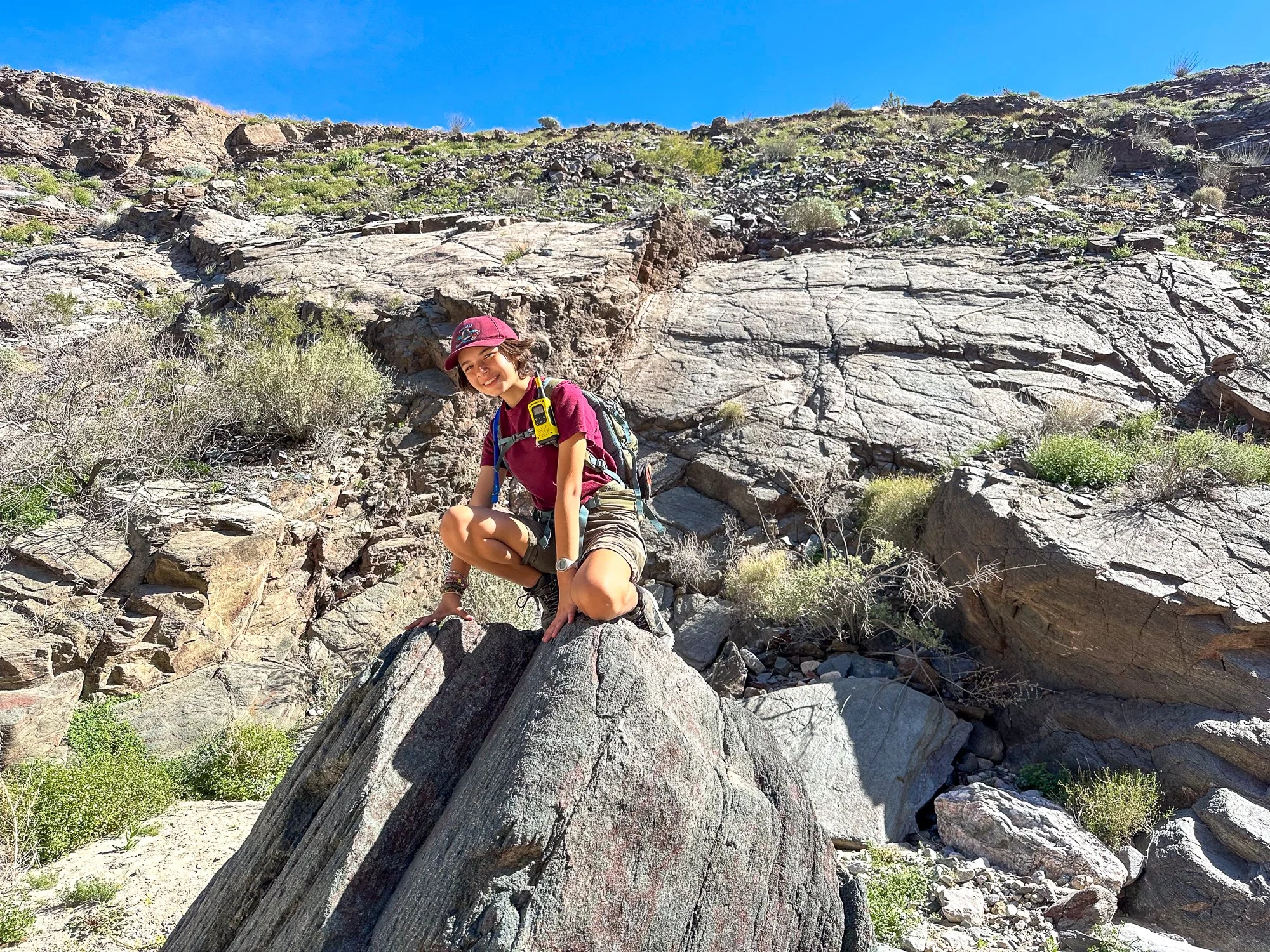
The Mecca Hills sit directly along the San Andreas Fault, one of the most studied fault systems in the world.
The twisted, buckled, and sharply angled rock formations visible throughout the hike are the result of tectonic pressure as the Pacific and North American plates grind past one another.
Over millions of years:
Sedimentary layers were uplifted and folded.
Earthquakes fractured the terrain.
Seasonal flash floods carved slot canyons through softer rock.
The dramatic tilting of rock layers you’ll notice along the ridgeline is direct visual evidence of tectonic strain. You are not simply hiking in a desert. You are walking through a fault zone in motion.
Environmental & Safety Considerations
This is a true desert environment.
Heat: Summer temperatures can exceed safe hiking limits. Even spring and fall afternoons can be intense. Start early.
Water: Carry more than you think you need. There is no water available on trail.
Flash Floods: Never enter the canyon system if rain is forecast — even if it’s raining miles away. Slot canyons funnel water quickly and dangerously.
Vehicle Access: Painted Canyon Road can become impassable after storms. Check conditions before heading out.
Commitment: Once you leave the slot canyon and reach the ridge, the loop must be completed. There are no practical exit shortcuts.
Family Considerations
We returned in 2024 with our teenagers, and the hike proved to be both manageable and memorable.
For families with older kids:
Comfort with ladders and heights is essential.
Each person should carry their own water.
Closed-toe shoes with good grip are a must.
Clear group communication in slot canyon sections helps maintain safety.
This is not a stroller-friendly or dog-friendly route. But for older kids who enjoy climbing and problem-solving terrain, the experience can be deeply rewarding.
Why This Hike Is a Great Hike to Repeat
Some trails fade into memory.
Others become reference points — markers of seasons in life.
When we first hiked Ladder Canyon in 2000, it felt adventurous and unfamiliar. In 2003, it felt like revisiting something quietly special. And in 2024, hiking it again with our teenagers, it became something layered — geology beneath our feet and years beneath our memories.
This upcoming return will likely feel different again.
That’s the nature of both landscapes and life — shaped slowly over time, sometimes dramatically, sometimes imperceptibly.
Ladder Canyon & Painted Canyon remains one of the most unique hikes in Southern California — not because it is extreme, but because it reveals the desert honestly.
Twisted. Carved. Exposed. And always in motion.
I’ll be returning soon with a more experiential piece — the feel of the ladders, the silence in the slot canyon, and what it’s like to step back into a trail that spans decades of your own story.
Until then, consider this your guide to one of the most distinctive desert loops in the Mecca Hills.
— The Urban Backroads